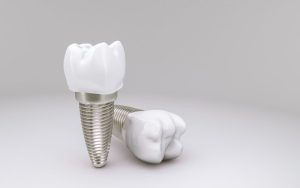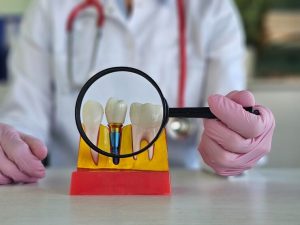


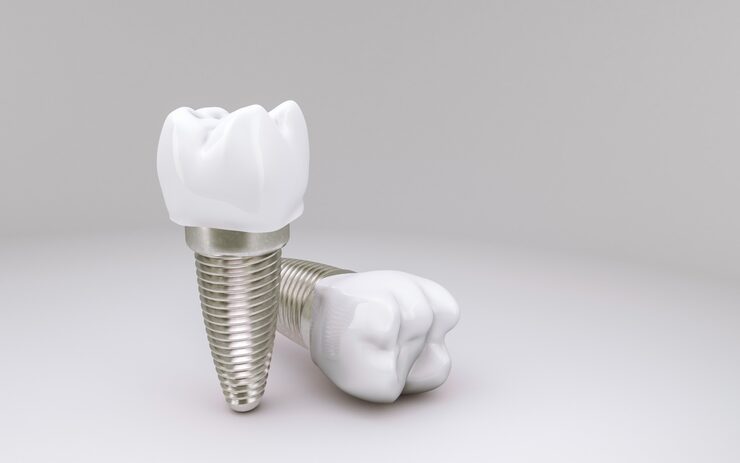
Dental implants are designed to provide a stable way to replace missing teeth. A common question is whether an implant is glued into place or screwed into the jaw. Dental implants in Coral Gables are not normally held in place with glue. The implant is placed into the jawbone, where the bone can gradually grow around it and provide support. A replacement crown is then connected to the implant using either a small screw or dental cement, depending on the treatment design.
Understanding these parts can make it easier to see how an implant stays secure and why different methods may be used for the crown.
Is a Dental Implant Glued or Screwed Into the Jaw?
A dental implant itself is generally placed into the jawbone rather than glued in. The implant acts as an artificial tooth root. Over time, the bone can grow closely around its surface and help hold it in place.
This process is called osseointegration, but it can be understood simply as the implant joining with the surrounding bone.
The implant may support:
- A single replacement crown
- A dental bridge
- A full-arch replacement
The exact design depends on the number of missing teeth and the condition of the mouth.
What Is Dental Implant Glue Used For?
Dental implant glue is not used to attach the implant itself to the jawbone. When people use the word “glue,” they may actually be referring to dental cement used to attach a crown to an implant-supported part.
Cement can be used with certain implant crown designs. The cement holds the crown in position over a connecting part attached to the implant.
This is different from household glue and is designed specifically for dental use.
Is Dental Implant Adhesive the Same as Regular Glue?
Dental implant adhesive is a general term that can cause confusion. Dental professionals may use specific dental cement when a cement-retained crown is chosen, but this does not mean the implant is glued into the jaw.
The implant is supported by the surrounding bone after healing. The crown attachment is a separate part of the treatment.
How Does a Tooth Implant Stay Secure?
Tooth implant glue is not what keeps the implant stable inside the jaw. Stability comes from the implant being placed into the bone and, after healing, becoming firmly supported by the surrounding bone.
Several factors can affect how well an implant heals, including:
- The condition of your jawbone
- Where the implant is placed
- How well you care for your teeth
- The health of your gums
- Smoking
- Following your dentist’s aftercare instructions
Regular dental checkups and good daily care can help protect the gums and bone around the implant.
Screw-Retained vs Cement-Retained Implant Crowns
A dentist in Coral Gables may use a screw-retained or cement-retained crown for an implant. The two types attach the crown to the implant in different ways.
Screw-retained crown
The crown is secured with a small screw that passes through the crown or its connecting part and attaches to the implant.
Cement-retained crown
The crown is placed over a connecting part and held in position with dental cement.
The choice may depend on the location of the implant, the planned crown, appearance, bite, and other treatment factors.
Can an Implant Crown Be Removed?
An implant crown may sometimes be removable by a dental professional, depending on how it was attached.
A screw-retained crown can usually be removed by taking out the small screw. A cement-retained crown can be harder to remove. In some cases, the dentist may need to cut the crown or replace it if it cannot be removed safely.
A dentist near you can determine how a particular implant crown is attached and whether it can be removed.
How Long Does an Implant Take to Fuse With Bone?
An implant does not become fully supported by the jawbone immediately after placement. Bone healing takes time, and the length of this process can vary between individuals.
The healing period may depend on:
- The location of the implant
- Bone quality and quantity
- Overall oral health
- Whether additional bone treatment was needed
- How well the area heals
The dental team will determine when the implant is ready for the next stage of treatment.
Understand How Your Dental Implant Will Be Secured!
The jawbone supports the implant itself, while the replacement crown can be attached with a screw or dental cement. Knowing the difference between these parts can make the treatment process easier to understand.
Book an appointment with Gables Sedation and Family Dentistry to discuss your dental implant treatment, understand how your replacement tooth will be attached, and learn what to expect during the healing process.
FAQs
Are dental implants glued in?
No. The implant itself is generally placed into the jawbone and becomes supported by the surrounding bone as healing takes place. Dental cement may be used to attach some implant crowns, but it does not hold the implant in the jaw.
How is a crown attached to a dental implant?
A crown can be attached using a small screw or dental cement. The method depends on the implant system, crown design, implant position, and treatment plan.
What is a screw-retained vs. cement-retained implant crown?
A screw-retained crown is held in place with a small screw. A cement-retained crown is attached to a connecting part using dental cement. Both types are attached in different ways and may be used based on your dental needs.
Can a dental implant crown be removed?
Sometimes. A screw-retained crown is generally easier for a dental professional to access and remove. A cement-retained crown may be harder to remove without damaging the restoration.